Chop and drop means cutting garden material and leaving it directly on the soil as mulch instead of carrying everything to a compost heap. We use leaves, grass clippings and softer plant material to feed the soil where it grows.
How we use it in existing beds
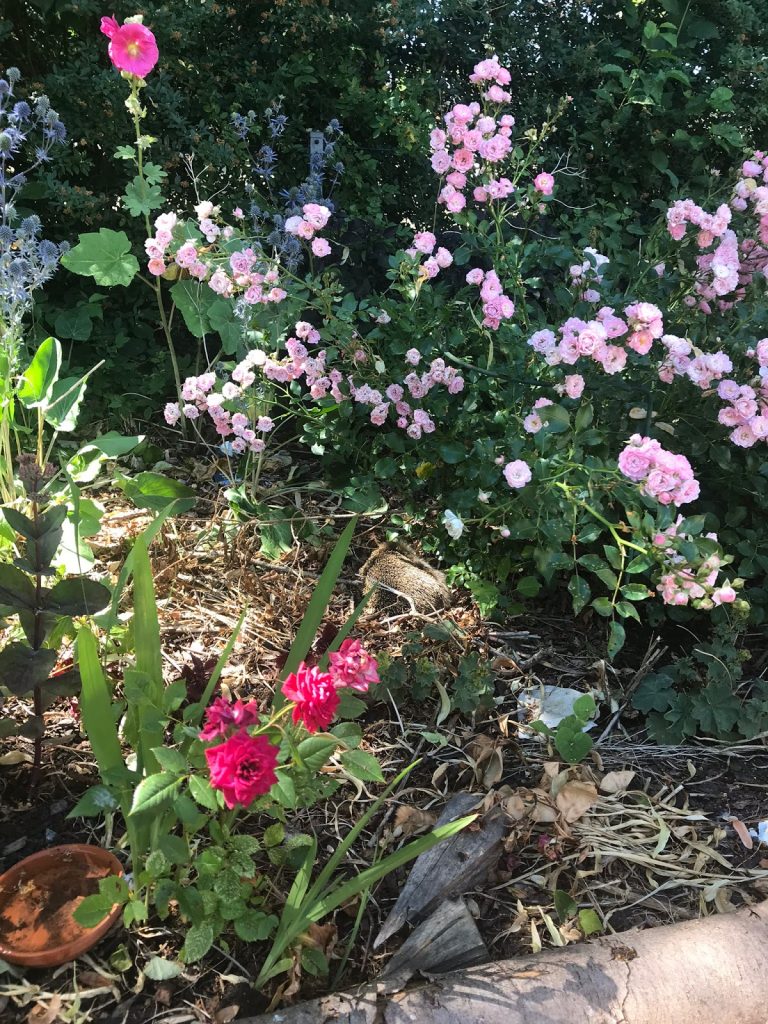
I cut suitable plant material into smaller pieces and spread it over the soil surface around established plants. Over time it dries, settles and is broken down by soil organisms.
Why I like the method
- Less material to move around the garden.
- The soil surface stays covered longer.
- Organic matter is returned where it is needed.
- Mulch can reduce evaporation and suppress some weeds.
- It gradually improves soil structure.
Starting a new growing area
For a new bed, I often combine the idea with sheet mulching: cover grass with overlapping cardboard, then add organic matter and a substantial mulch layer above it. That lets decomposition happen in place instead of first turning the whole area over.
What I do not leave in place
I am more selective with diseased plant material, mature seed heads from aggressive weeds and thick woody stems that will simply sit there for years. Those go elsewhere or are handled separately.
Does it look messy?
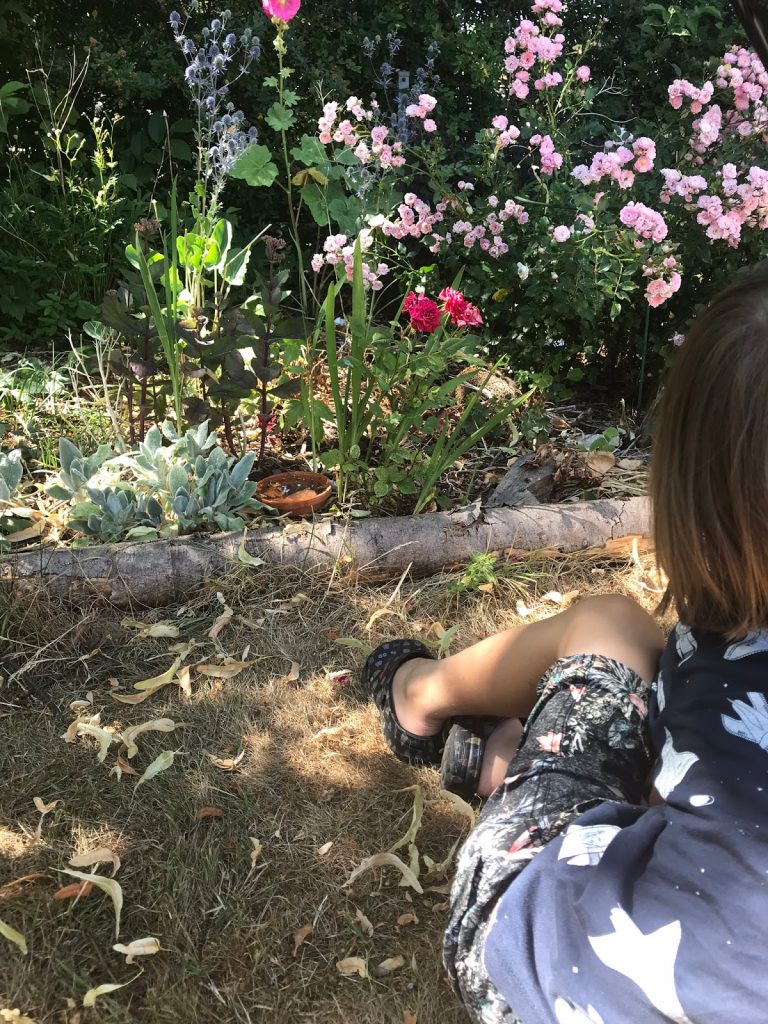
Sometimes, yes. That is probably the main disadvantage. A freshly mulched ornamental bed can look less “finished” than bare soil. I am happy to accept that trade-off in less visible areas because bare soil is not the goal in my garden.
The method appeals to me because it removes an unnecessary loop: plant grows, plant is cut, material is carried away, compost is made elsewhere, compost is later carried back. Sometimes the shortest route is simply downward.