
A cheap vacation-watering system without a timer or leaving the tap running: use a water reservoir and an absorbent wick that carries water into the pot by capillary action.
We wanted a simple solution for a few potted plants when leaving home for several days. Commercial drip systems work well, but for a small number of pots I preferred something that could not leave a pressurized water supply running while we were away.
How wick watering works
An absorbent cord can move water by capillary action. One end sits in a reservoir and the other is buried in already-moist potting mix. As the soil dries, water continues to travel along the wet wick.
Think of this as slow support watering rather than an unlimited irrigation system. How long it lasts depends on the reservoir size, plant, pot, temperature and the wick itself.
What you need
- A bottle, jug, bucket or other water reservoir.
- An absorbent cotton cord or strip of fabric.
- A potted plant that has been watered normally before you leave.
Step by step
- Water the plant thoroughly as usual.
- Fill the reservoir.
- Soak the entire wick before installing it.
- Put one end well down into the water.
- Bury the other end a few centimetres into the potting mix, reasonably close to the root zone.
- Place the reservoir roughly level with, or slightly above, the soil surface.
- Test the setup for one or two days before leaving home.
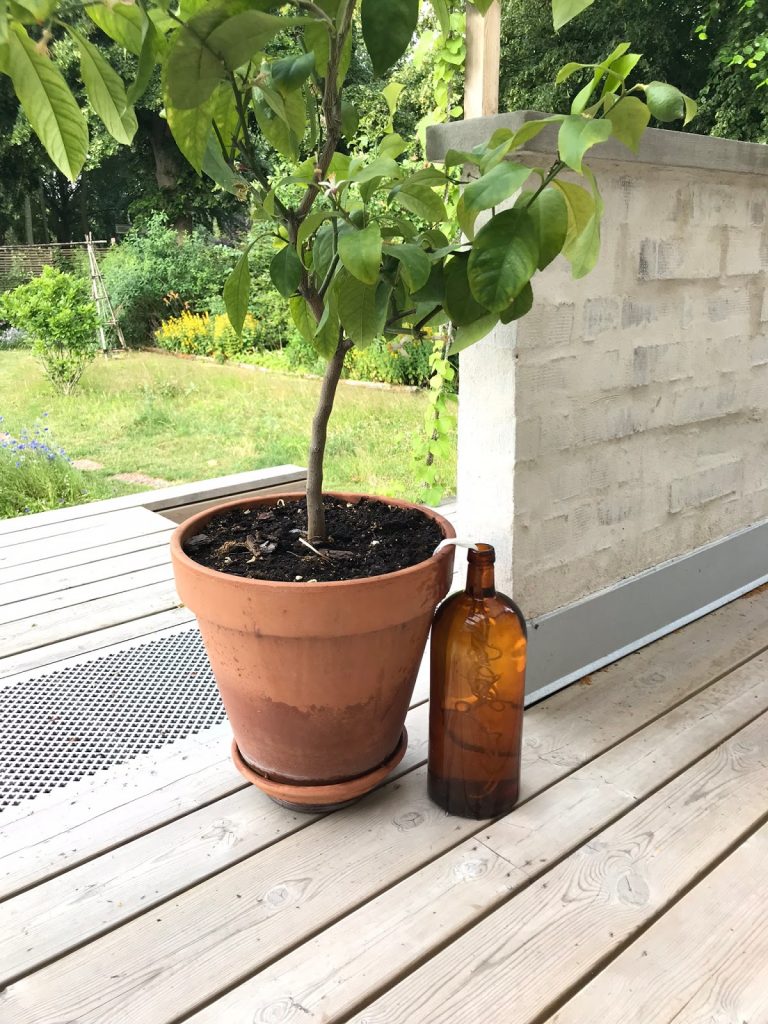
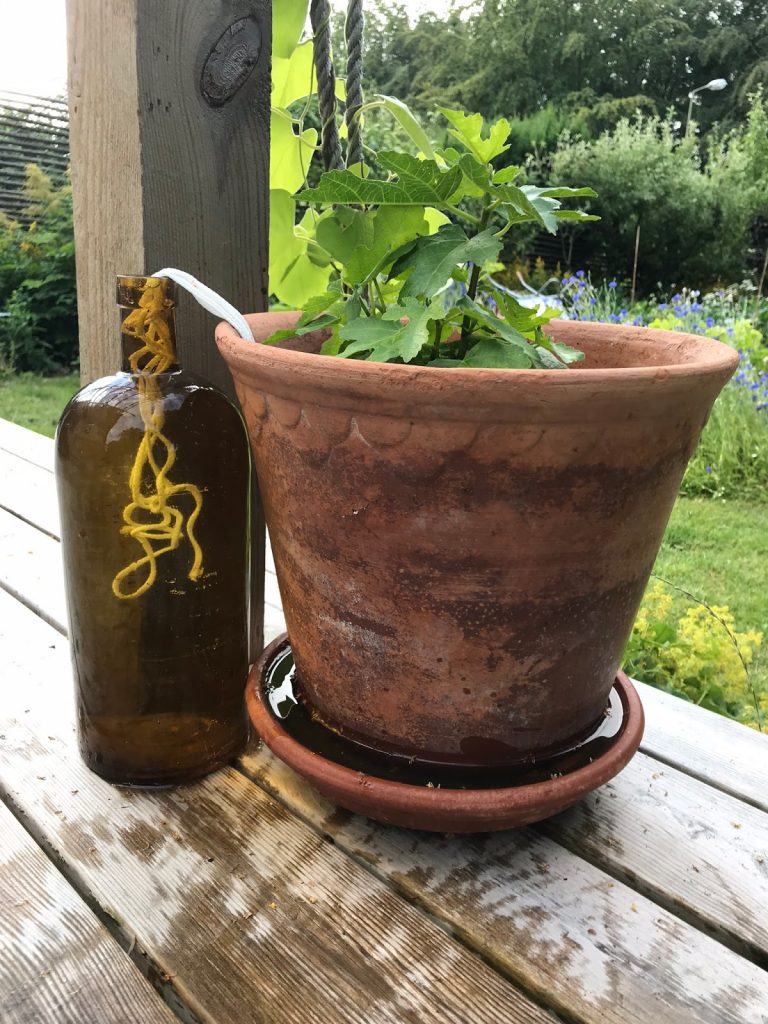
For larger or thirstier plants
For cucumbers and tomatoes we used a larger watering can as the reservoir and more than one wick. The principle is the same, but thirsty plants need a reservoir and flow rate that can actually keep up.
The cord we happened to use was an old cotton lamp wick. The exact product is not important. What matters is that the material absorbs and transports water. A synthetic cord that barely wets through will work poorly.
Three things that matter most
- Test before your trip. Wick materials and potting mixes can give very different flow rates.
- Move pots out of strong direct sun if possible. Reducing evaporation can be as valuable as adding water.
- Build in margin. For a long absence, use a much larger reservoir, multiple wicks or a proper irrigation system.
For us this was a typical frugal fix: almost free, easy to understand and good enough for the problem we actually had.