
Linseed oil soap is a traditional Scandinavian cleaning product made by saponifying linseed oil. I like it because it is concentrated and useful for several fairly demanding cleaning jobs—but it is not a universal cleaner for every material.
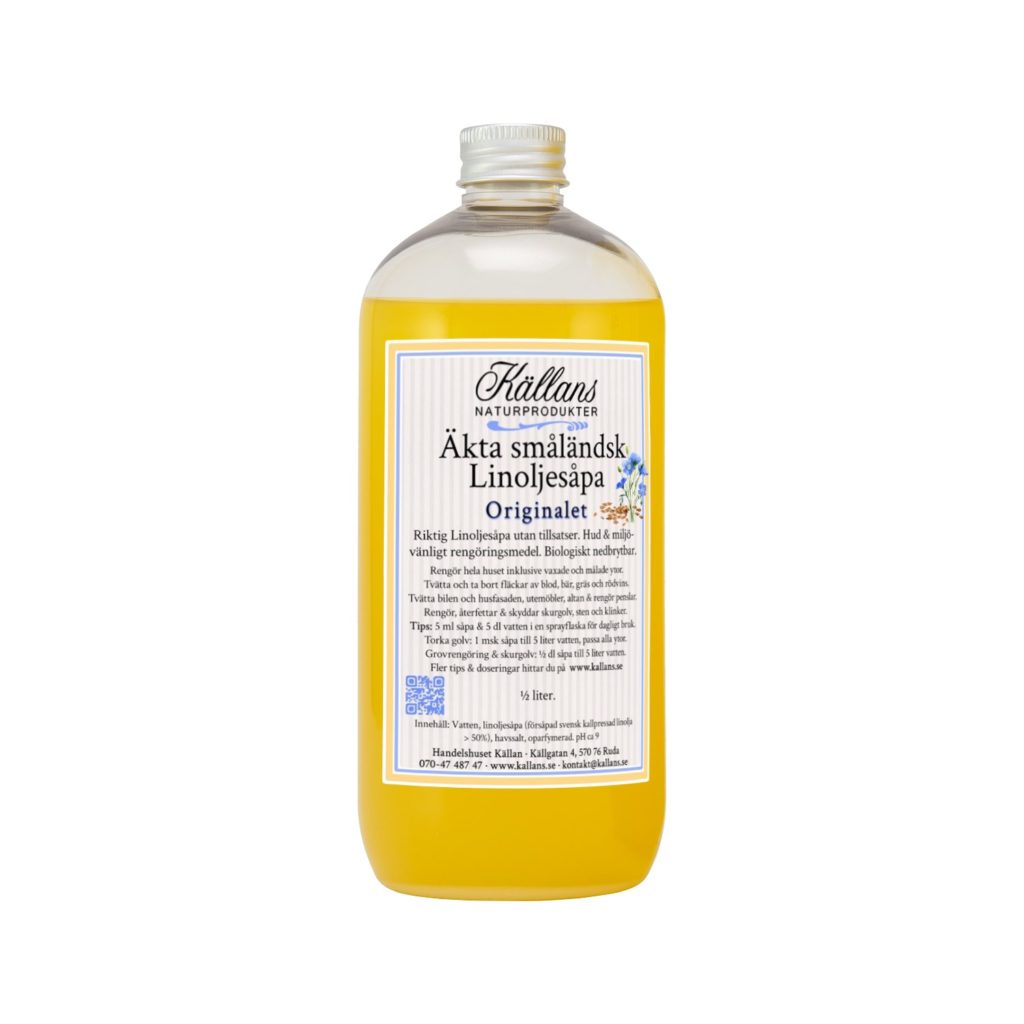
What is linseed oil soap?
Linseed oil soap is produced by turning linseed oil into soap through saponification. It is alkaline and has traditionally been used for cleaning wood, floors, brushes and other robust surfaces.
What we use it for
- Cleaning untreated or soap-finished wooden floors where soap is appropriate.
- Heavy cleaning of timber surfaces when the finish permits it.
- Decking and outdoor timber.
- Cleaning some brushes and tools after paint or oil work.
- General cleaning on surfaces that tolerate an alkaline soap.
I test a small inconspicuous area first when I am unsure about a finish.
What I no longer recommend automatically
Years ago I treated linseed oil soap almost as a cleaner for everything. I would not publish that advice today. Surface treatments and materials differ too much.
For cast-iron cookware, for example, I now prefer hot water, mechanical cleaning and, when necessary, a little mild dish soap. See my cast-iron cleaning guide.
Why “natural” does not mean suitable for every surface
The fact that a cleaner comes from a familiar plant oil does not make chemistry disappear. Linseed oil soap is alkaline. That is useful for some cleaning jobs and exactly why it may be wrong for sensitive stone, certain paints, waxed surfaces or materials whose manufacturer specifies a neutral cleaner.
Use the properties of the product rather than the marketing category to decide where it belongs.
A note on environmental claims
I also avoid calling any single cleaner “the most environmentally friendly” by default. Environmental impact depends on raw materials, manufacturing, transport, concentration, packaging, dosage and how a product is used.
One thing I do like about concentrated soap is that a small amount can go a long way.
The Swedish word to look for
If you are searching Scandinavian shops or reading Swedish renovation sources, the term is linoljesåpa. Recipes and product strengths vary, so follow the dilution and surface instructions for the specific product you buy.
My conclusion is simple: linseed oil soap is genuinely useful, especially around wood, but it is a cleaner with specific chemical properties—not magic in a bottle.