If old windows or doors feel draughty, the weatherstripping is worth checking before doing anything expensive. In our 1950s house several seals had become hard, brittle and compressed. Replacing them was cheap, easy and made the rooms noticeably more comfortable.
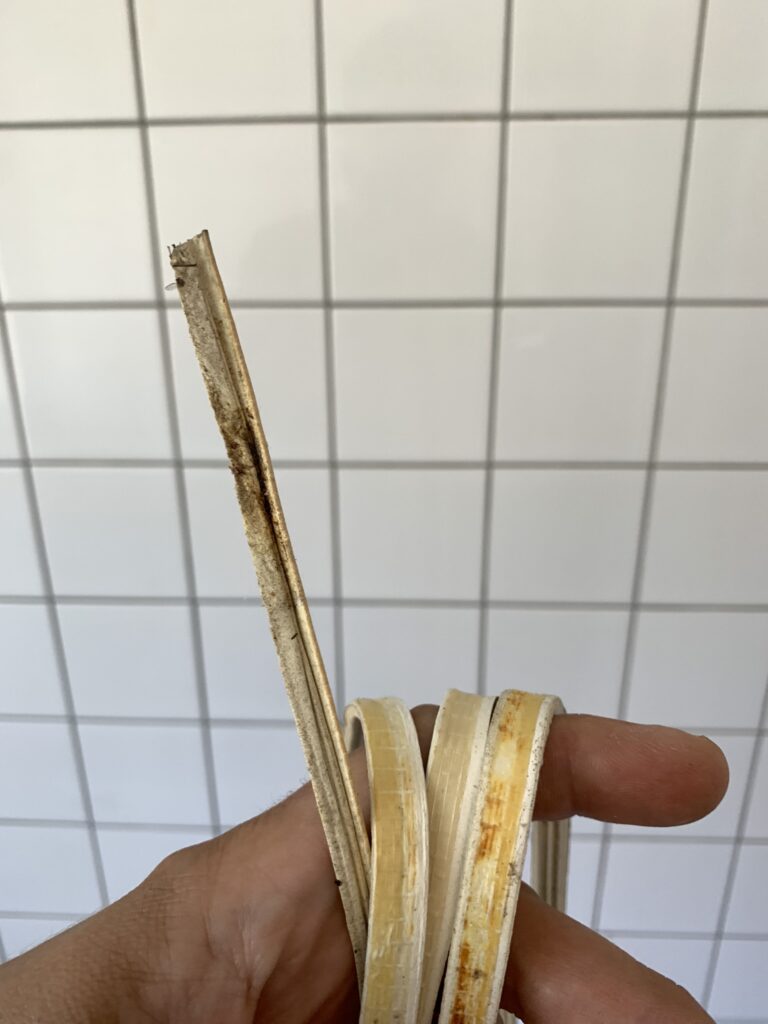
How to tell if a seal needs replacing
Look for cracking, hardening, permanent flattening or obvious gaps. If you can feel a draught around a closed window or door, inspect the seal—but do not automatically fit the thickest profile you can find.
An oversized seal can make a window difficult to close and place unnecessary load on hinges and hardware.
How I replace weatherstripping
- Remove the old strip completely.
- Clean away adhesive, dirt and loose material.
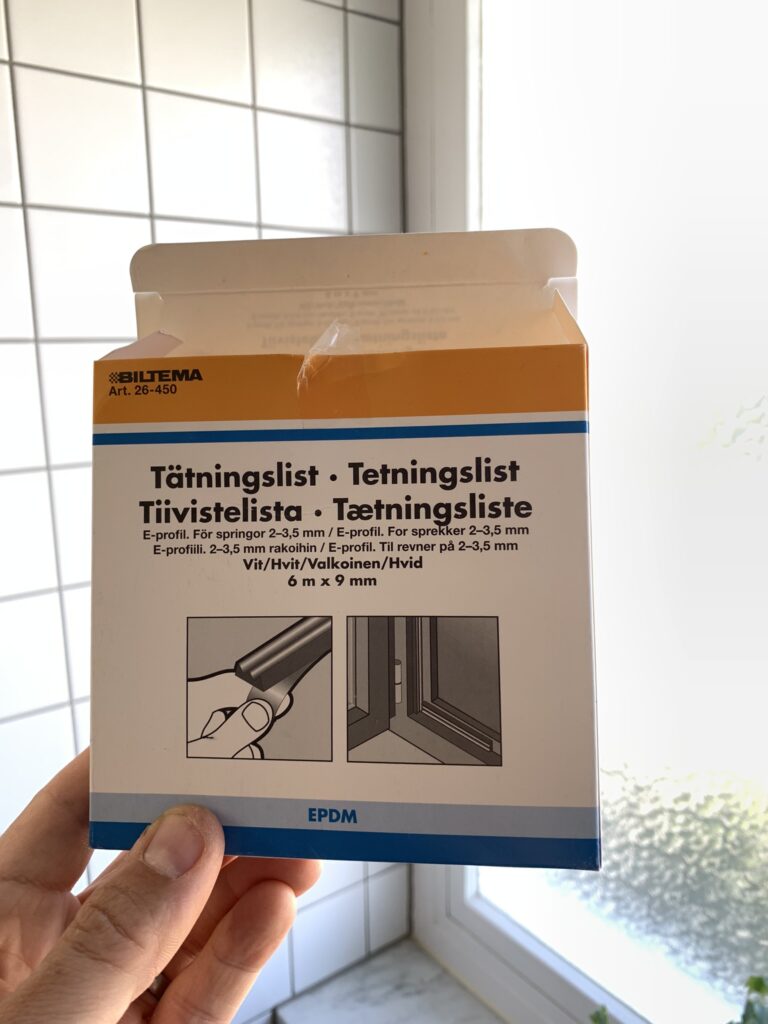
- Measure the actual gap between frame and sash/door.
- Choose a profile designed for that gap range.
- Cut the strip to length without stretching it.
- Press it firmly into place.
- Close the window or door and check that it seals without becoming difficult to operate.
A simple way to estimate the gap
You can place a small piece of soft foil or modelling material in the gap, close the window, then measure the compressed thickness. The point is not laboratory precision; it is to avoid guessing completely.
Do not accidentally seal away your ventilation
This was the more important lesson for us. Our 1958 house relies on natural ventilation. Once I sealed the old windows properly, I also removed some of the accidental air leakage the house had been using as supply air.
Later we installed proper fresh-air wall vents. If you draught-proof an older naturally ventilated house, think about the whole ventilation path rather than only the cold air you can feel.
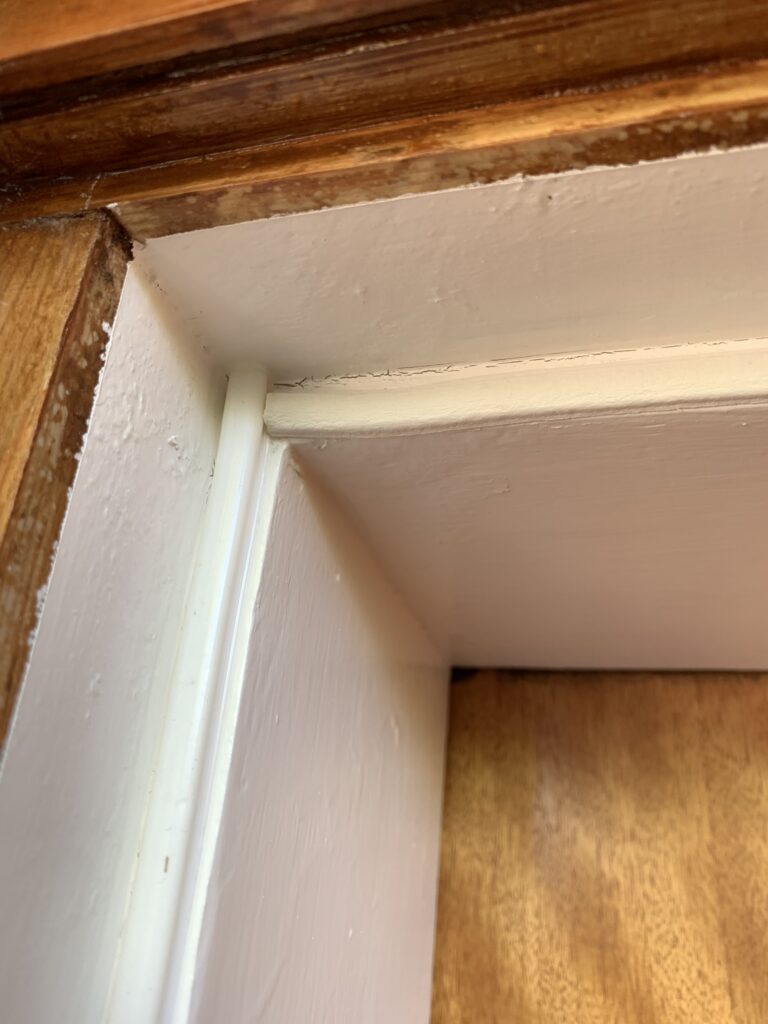
For us, replacing worn seals was absolutely worth doing: low cost, little work and an immediate comfort improvement.