
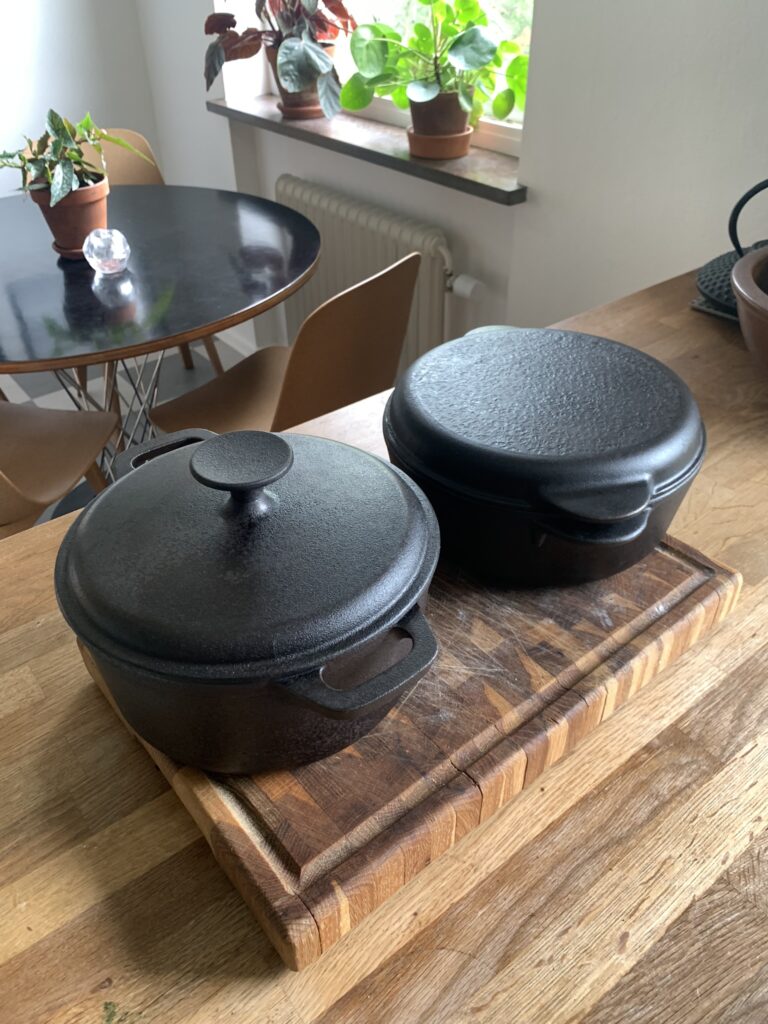
A badly rusted cast-iron pot can often be saved. I restored one that had spent about a year and a half outdoors, full of water and previously used over fire. The process was simple: remove the rust, clean it thoroughly, dry it completely and rebuild the seasoning in very thin layers.
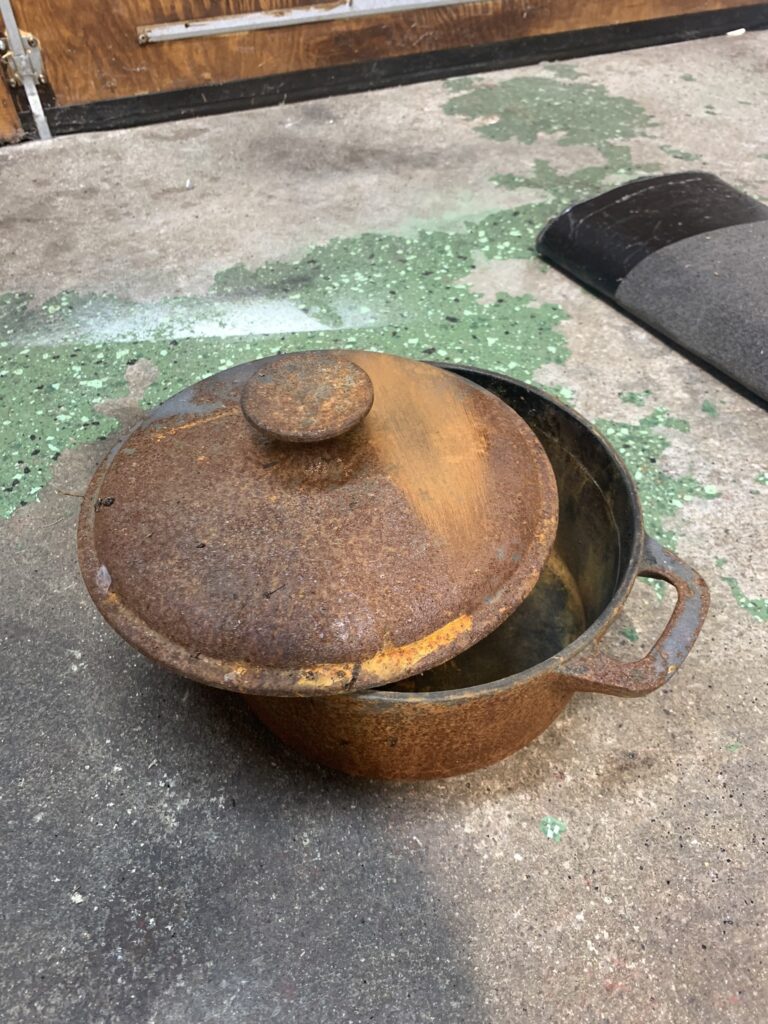
First: make sure it is bare cast iron
This method is for uncoated cast iron. If the pot is enamelled, do not grind away the enamel and treat it like bare iron. Damaged enamel is a different problem.
What I used
- Sandpaper
- Wire brush
- Mild dish soap
- Refined rapeseed/canola oil
- Paper towels or a lint-free cloth
Step by step
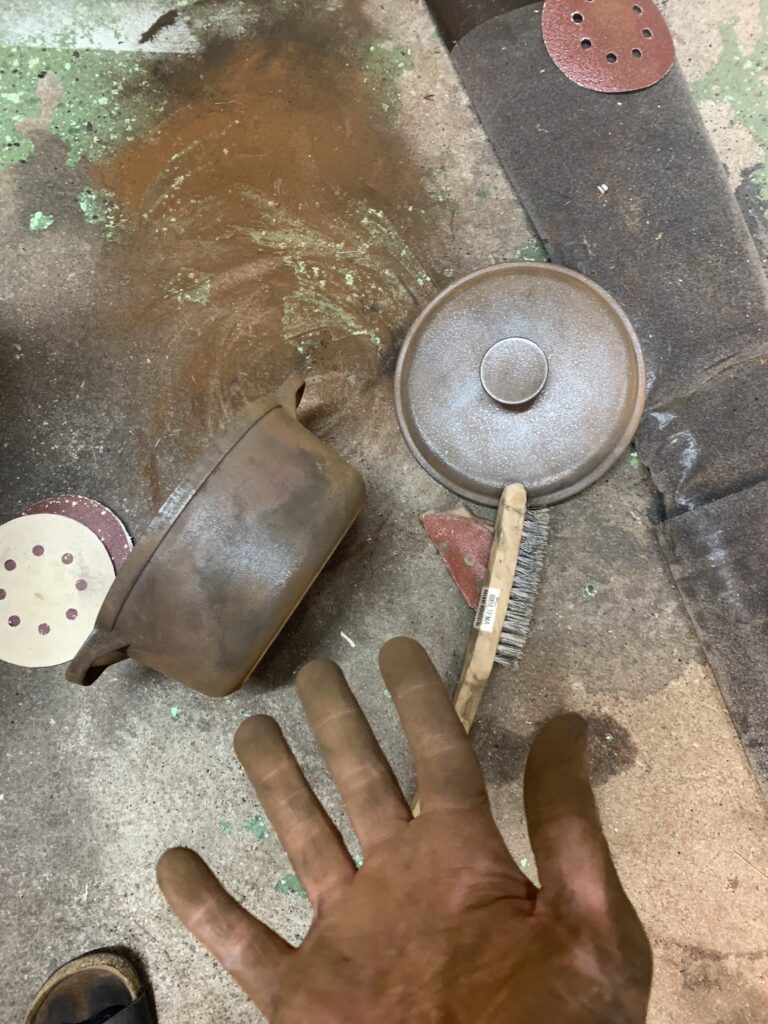
- Remove all visible rust mechanically with sandpaper and a wire brush. I spent roughly an hour on mine.
- Wash the pot several times with hot water and dish soap to remove dust, old grease and loose residue.
- Dry it completely. I warmed mine on the stove so no moisture remained.
- Apply a very small amount of oil over the entire bare surface.
- Wipe almost all of it off again. The coating should look nearly dry; thick oil produces sticky or uneven seasoning.
- Heat the pot in the oven according to a seasoning method suitable for the oil and cookware you are using. I used 250°C and placed the pot upside down.
- Let it cool, then repeat the oiling and heating until the surface is dark and even.
The important part is thin oil
The biggest mistake in seasoning is often using too much oil. I want a microscopic film, not a visible wet layer. Wipe it as if you accidentally put oil on the pan and are trying to remove it again.
How I look after it afterwards
For everyday use, clean cast iron with hot water, a brush or scraper and a little mild dish soap when needed. Dry it immediately. Add a tiny film of oil only when the surface looks dry.
Cast iron is one of my favourite examples of repairing instead of replacing. Even something that looks genuinely ruined can often come back with an hour of work.