
Quick answer: We turned lawn into garden beds without digging out the turf by covering the grass with overlapping cardboard and then adding a thick layer of bark mulch. The cardboard blocks light, suppresses the grass and eventually decomposes.
Sheet mulching: cardboard and bark over grass
This is sometimes called sheet mulching or no-dig bed preparation. It is a simple way to reduce a lawn area and create planting beds or paths without removing the entire sod layer.
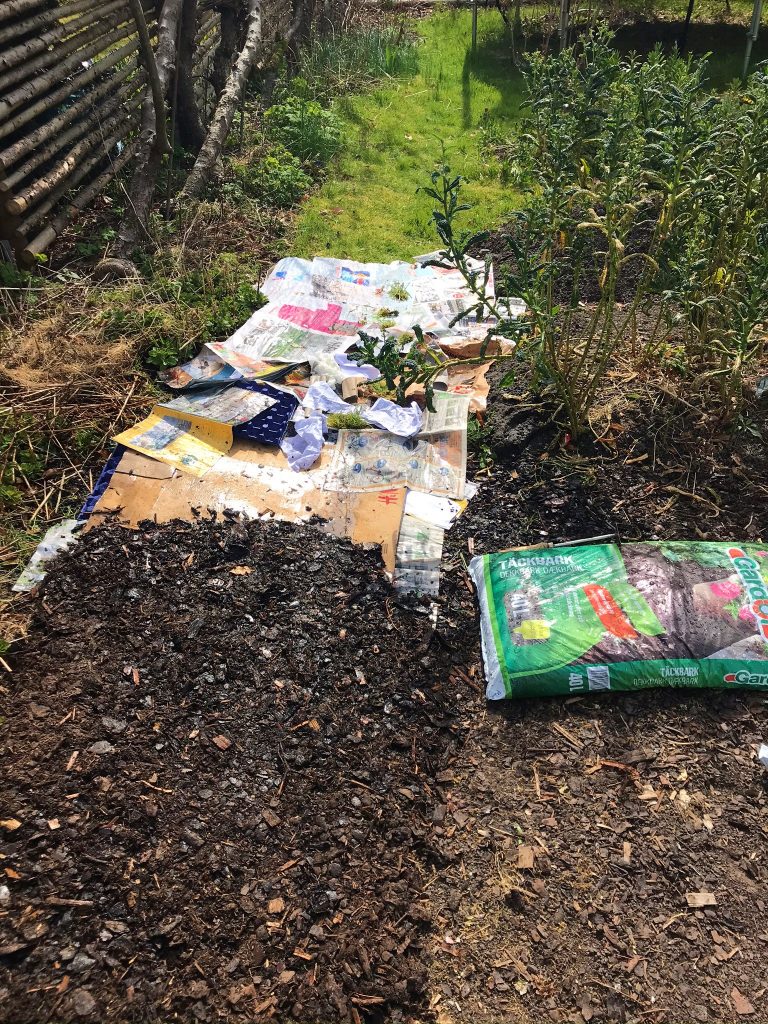
How we did it
- Mow or flatten the grass.
- Lay overlapping pieces of plain cardboard over the area.
- Remove plastic tape, labels and other non-compostable material.
- Wet the cardboard so it stays flat.
- Add a generous layer of bark mulch or wood chips.
- For planting, open a small hole through the mulch and cardboard where needed.
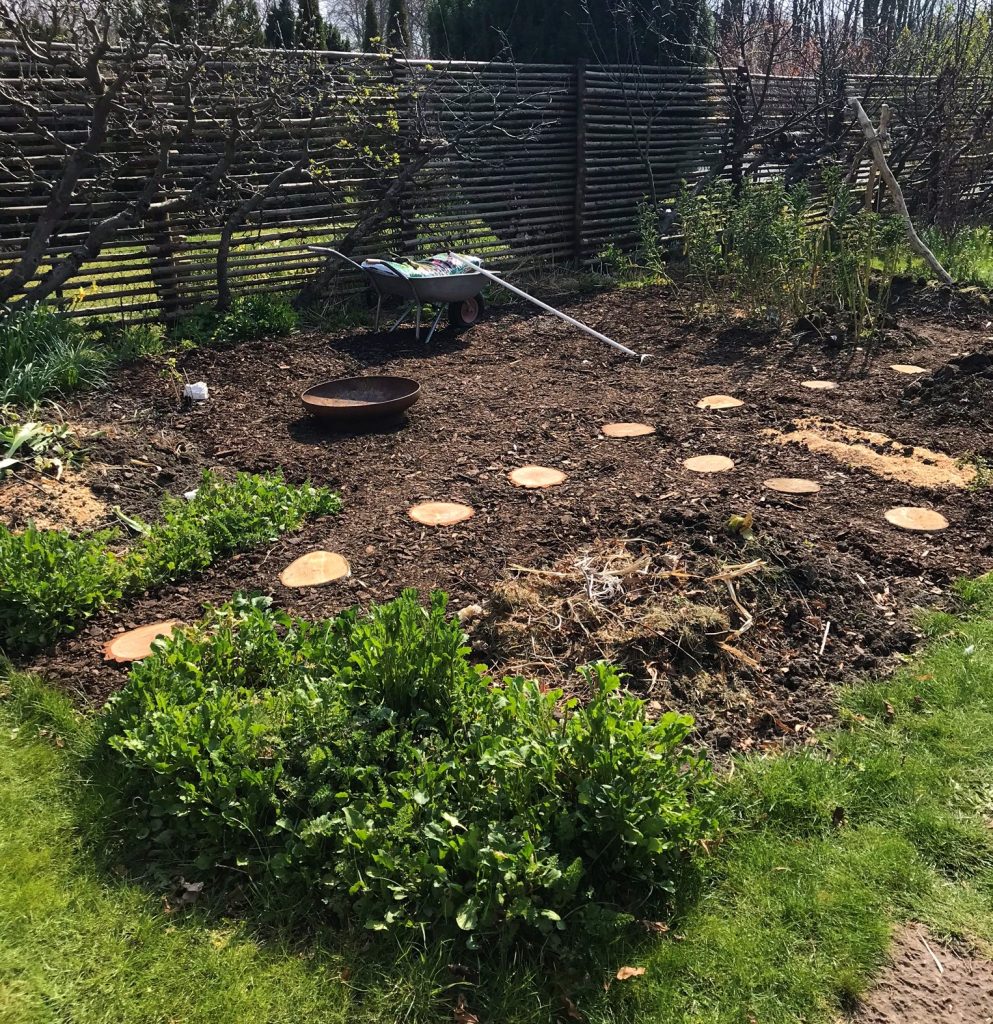
Why use cardboard instead of landscape fabric?
For planting beds, I prefer plain cardboard because it decomposes instead of leaving a permanent synthetic layer in the soil. Landscape fabric can still make sense for some non-planting paths, but it is not necessary for this method.
What happens over time?
The bark slowly decomposes and needs topping up. That is one reason we later switched to coarser wood chips in parts of the garden: they lasted longer for us.